
Lent 2026 · Day 20: The Art of Gracious Compliments and Kind Words
- Mar 17
- 4 min read
"Kind words can be short and easy to speak, but their echoes are truly endless." — Mother Teresa
My friends love giving me dating advice because, let’s be honest, I’m not great at it. You’d think after as much dating as I’ve done, I’d be better at it.
One time, I told a friend how terrible I am at giving compliments. I tend to assume that if I’m dating someone, they already know I find them beautiful, hot, sexy, whatever. I mean… I wouldn’t be with them if I thought they were hideous, right?
Apparently, that logic does not translate well in romantic situations.
Looks aren’t everything, though. Real attraction comes from the inside out.
Kindness? Hot.
Compassion? Sexy.
A great sense of humor? Irresistible.
You can be stunning on the outside, but if you’re mean and cruel? Hard pass.
The problem is that I’m blunt. Sometimes painfully honest. And I hate tired, overused lines. My delivery could use… improvement.
A friend once asked me for an example of how I give compliments.
Me: “You look good.”
Them: “No, I don’t, Vangie. I don’t even have makeup on.”
Me: “Well, at least you don’t look like sh*t.”
Them: “Another classic Vangie compliment.”
Me: “You could’ve just said thank you.”
End scene.
Another classic moment:
Friend: “Do these pants make my butt look big?”
Me: “Blame it on the pants.”
Friend: “Blame it on the pants?”
Me: “No?”
Look, I try.
My friends are convinced I need help.
And honestly, they are not wrong.
You know those five love languages? Well, words of affirmation is not at the top of my list. Words of criticism might actually describe me better, at least toward myself.
If someone says to me, “Vangie, I see your effort. I know you can do better,” I usually will. Because that tells me you see me trying. You see me doing my best. And that means you care.
But criticizing just to criticize? Go away with that.
A lot of the dating and romance self-help advice floating around out there is part research, part speculation, and part anecdotal storytelling. Like most things in life, there’s usually a grain of truth somewhere in the mix.
People love differently. What they need from each other can look very different.
It took me a long time to understand that just because I show up, do the things someone asks of me, and give my best effort, that isn’t always how another person experiences love.
My primary love language is acts of service. That probably isn’t surprising.
I also believe time is one of the most valuable things we have. When someone takes time out of their day and their life to be with you, that means something. That means you matter.
There are people who have taken up a lot of my time that I will never get back. And there are people I spend time with where I wish we had more of it.
When I care about someone, whether they are friends or partners, I try to do all the things. I show up when I’m supposed to. I do the things that are expected. I say words of appreciation. I give gifts. I hold someone when they need to be held.
What I’ve learned over time is that loving people well often means meeting their love language where they are.
But let’s get back to words.
Because words matter more than we sometimes admit.
The funny thing is, the same conversations where we laugh about dating and terrible compliments often drift into much heavier territory.
One minute we’re talking about golf or relationships. The next minute we’re talking about jobs, finances, politics, and the general chaos of the world.
About how people are just trying to survive.
Trying to pay their bills.
Trying to keep their jobs.
Trying to hold on to whatever stability they can.
Meanwhile, the powerful keep protecting the wealthy while everyone else gets squeezed tighter and tighter. History keeps repeating itself because people refuse to learn from it.
Entire communities have carried generations of injustice that were never repaired or meaningfully acknowledged. And people wonder why the country feels like it’s unraveling. Sometimes it feels exhausting just fighting for the basic right to exist with dignity.
Which is why the conversations we have with each other matter so much. Because words aren’t just jokes and compliments.
They shape how people see themselves.
They shape how we understand the world.
They shape whether people feel valued or invisible.
Words can build someone up.
Or they can slowly grind someone down.
Lenten Reflection: Speaking Life Into People
The letter of Epistle to the Ephesians reminds us:
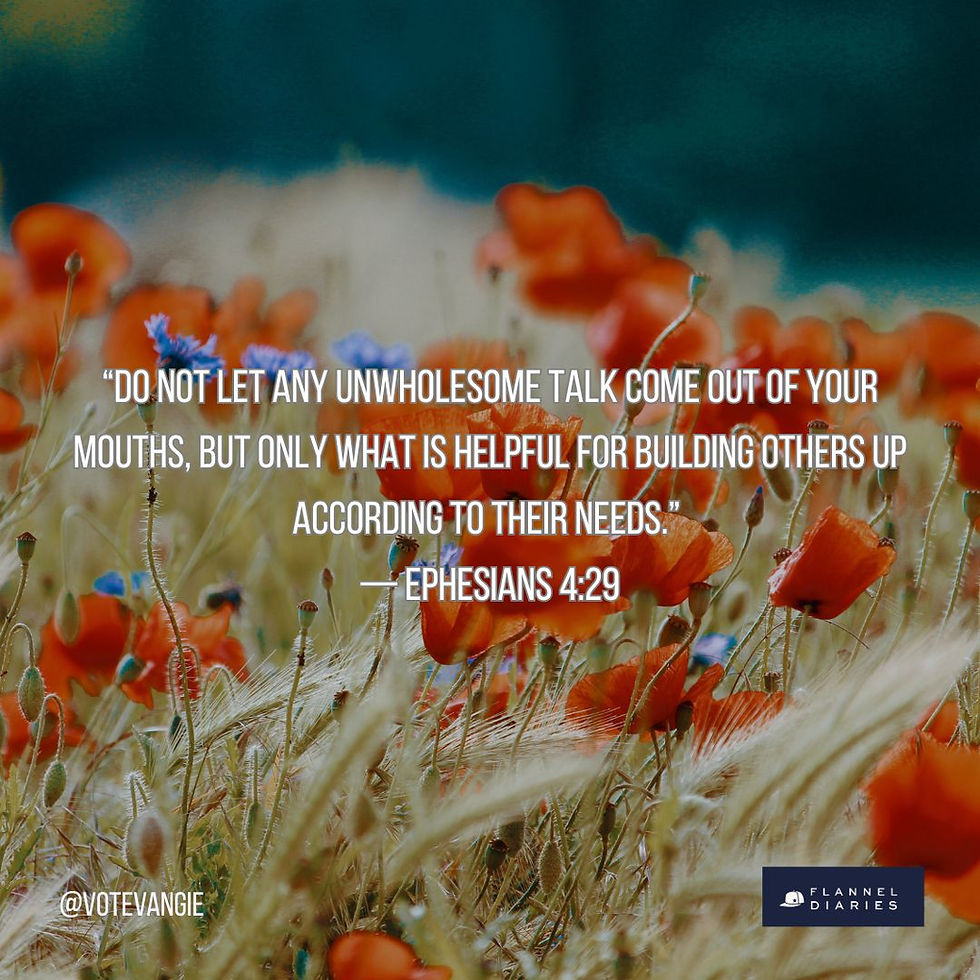
“Do not let any unwholesome talk come out of your mouths, but only what is helpful for building others up according to their needs.” (Ephesians 4:29)
That’s a deceptively simple instruction.
Speak words that build people up.
Not flattery.
Not empty politeness.
Not the kind of compliments we throw around without meaning them.
But words that actually strengthen the people around us.
I’ve learned over time that people receive love in different ways. Some people need acts of service. Some people need time and presence. Some people need physical closeness.
And some people really do need words.
Words that say, "I see you."
Words that say, "You matter."
Words that say, "You’re doing better than you think."
My instinct has always been to show love through action. I show up. I help. I do the things that need to be done.
But Lent has a way of inviting us to look a little closer at ourselves.
To ask where we could be more intentional.
More thoughtful.
More generous.
Because words carry weight.
They can build confidence.
They can heal wounds.
They can remind someone that they are not invisible in a world that often makes people feel that way.
So maybe part of this Lenten journey is learning to use our words with more care.
To speak truth.
To speak kindness.
To speak life into people whenever we can.
Even if it doesn’t always come naturally.
Even if sometimes our version of a compliment accidentally sounds like, “Well… at least you don’t look like sh*t.”
Progress, not perfection.
Take care of yourselves.
And take care of each other. 💜

.jpg)


Comments