
Lent 2026 · Day 23: Loving in a Hopeless Place

“We fear that evaluating our needs and then carefully choosing partners will reveal that there is no one for us to love. Most of us prefer to have a partner who is lacking than no partner at all. What becomes apparent is that we may be more interested in finding a partner than in knowing love.” — bell hooks
In my early twenties, I remember reading "The Lone Ranger and Tonto Fistfight in Heaven," by Sherman Alexie and feeling something shift in me. A deep, quiet ache settled in my chest. The kind that recognizes truth before your mind can explain it.
He was naming something I had felt but didn’t yet have language for.
In one story, Victor, a Native man, walks into a 7-Eleven to buy a creamsicle. The cashier watches him closely, just in case he needs to describe him to the police. Victor feels it. That silent, heavy suspicion. That othering.
The story flashes back to when he was living in Seattle with his white girlfriend. After a fight, he steps outside and is stopped by the police. They tell him he doesn’t “fit the profile” of the neighborhood. In his mind, he thinks, I don’t fit the profile of the entire country, but he swallows it. He knows better. He knows saying that truth out loud could get him unalived.
And if you really sit with that, it tells you everything.
Especially when Native people were here long before any of us.
What I didn’t understand then, but do now, is that this feeling doesn’t just live in public spaces. Sometimes, it shows up inside our relationships.
I’ve dated women from different backgrounds, but my longest relationships were with white women. And over time, through breakups and a lot of therapy, I had to face something I didn’t want to admit.
Cultural difference isn’t just about food or holidays or music.
It’s about identity.
It’s about how you move through the world.
And how the world responds to you.
There were moments in those relationships that didn’t make sense on the surface. Small misunderstandings would spiral. Little things would turn into big fights, and I couldn’t always explain why something “small” felt so big inside me. But it wasn’t small.
I had already given up so much of my Filipino identity just to survive in this country. And there I was, doing it again, just to stay in love. The truth is, I was already fluent in shrinking. I learned early how to assimilate. People are often surprised when they find out I wasn’t born in the United States. I don’t have an accent. That wasn’t accidental. That was learned. I learned to sound “American.”
And over time, I lost fluency in my first language, Visayan. My mother spoke it until the end of her life. In her final years, she returned to it fully, and I couldn’t keep up. I had to rely on my nephew to translate. And even then, I wasn’t always sure I could trust what was being said.
That kind of loss is hard to name.
Losing a language is more than losing words. It’s losing access. To memory. To intimacy. To your ancestors. It’s losing a part of yourself you can’t easily get back.
And still, I kept trying to make relationships work.
I translated. I softened. I explained. I thought that was love. Bridging the gap. Meeting in the middle. Making myself easier to understand.
But that “middle” was rarely mutual.
More often than not, it was me moving closer to them.
I am a brown person living in a white world who will never be white. And for a long time, I navigated that world by becoming fluent in assimilation.
One therapist told me that when you suppress your emotions, they don’t disappear. They come out sideways.
That’s exactly what was happening.
I didn’t have language for what I was feeling, so it showed up as frustration. As distance. As running. I would hit balls at the batting cages, play sports, run until my body gave out, anything to physically exhaust something that was emotional.
Because for a long time, feelings felt dangerous.
Feelings get you labeled. Too much. Too loud. Too emotional.
And when you are BIPOC in this country, those labels don’t just come with judgment.
Sometimes, they come with consequences.
So I learned to manage my emotions.
Until I couldn’t.
Writing became the place where I finally started telling the truth. Because if you don’t tell your story, someone else will. And more often than not, they will not tell it kindly.
Naming what hurts is where healing begins. That essay gave me a mirror. And what I saw reflected back was this... I had been trading pieces of myself in the name of love. Over and over again.
And here is the truth that took me a long time to say out loud, Loving your colonizer will always lead to heartbreak.
When power dynamics are built into the relationship, love alone cannot undo them. No matter how much care you offer, something will leak through the cracks. Not always all at once. Not always in ways you can easily point to.
But slowly. Quietly.
In the compromises you make.
In the things you don’t say.
In the parts of yourself you soften so the relationship feels easier to hold.
Until one day, you look up and realize you have been disappearing inside something that was supposed to be love.
That doesn’t mean those relationships weren’t real.
It means racism is.
Being a white person who loves a Black or brown person does not automatically make someone anti-racist. Not if they are unwilling to do the work. Not if they are unwilling to confront power, unlearn dominance, and actively participate in decolonizing both heart and mind.
Liberation is not passive.
But there is also this, when we begin to liberate ourselves, we give others permission to do the same.
So can we find love in a hopeless place, like Rihanna asks?
Maybe.
But only if we bring our full selves to the table.
Unapologetically.
Without translation.
Without shrinking.
Only if we learn how to hold onto our identity while we hold someone else’s heart.
And maybe that’s where it begins.
Not with finding the right person.
But with refusing to leave yourself behind in the process.
Because love that lasts requires truth.
The kind that lets you show up fully.
The kind that does not ask you to become smaller to be held.
And maybe, just maybe, that is what makes love possible at all.
Lenten Reflection: Standing in Truth
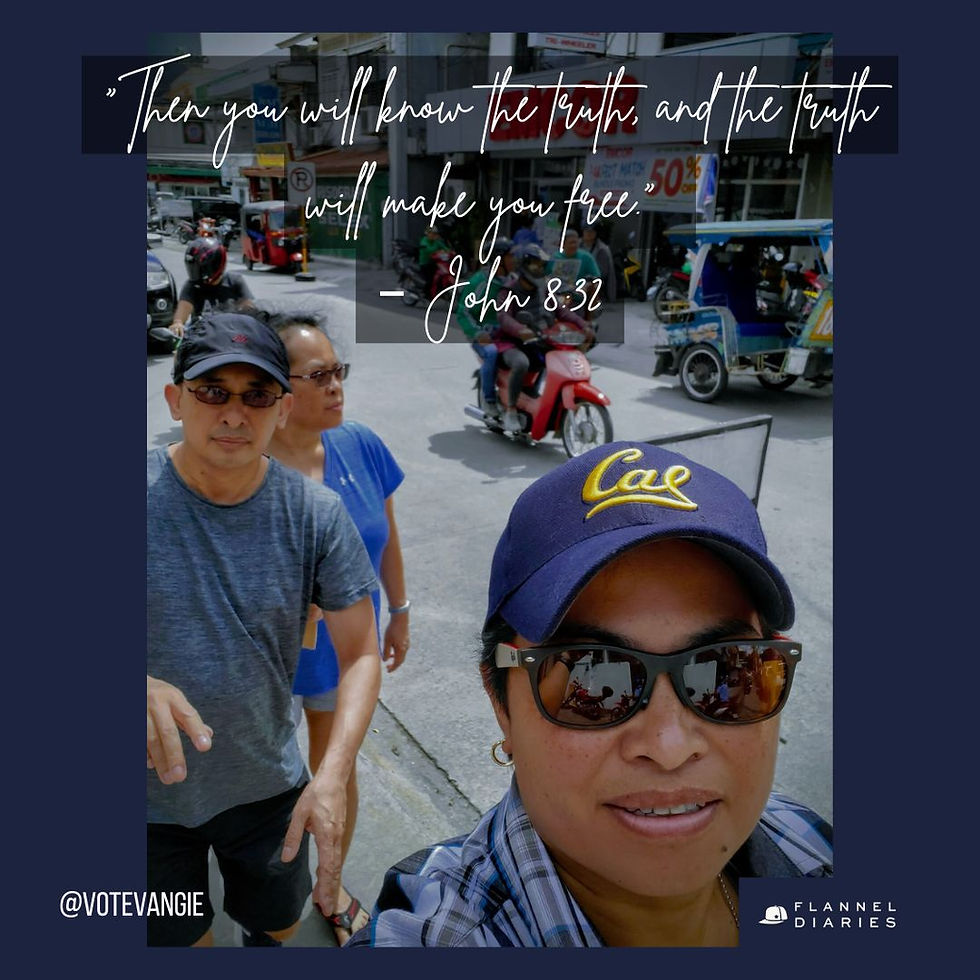
“Then you will know the truth, and the truth will make you free.” – John 8:32 (NRSV)
Lent is a season that asks us to tell the truth.
Not the polished version. Not the version that makes other people comfortable. The real one.
The truth about where we’ve been quiet.
The truth about where we’ve made ourselves smaller.
The truth about what we’ve carried just to be loved.
And the hard part is, truth-telling isn’t just about what has been done to us. It’s also about what we’ve done to ourselves to survive.
Where have I quieted my voice to be accepted?
Where have I traded parts of myself in the name of love?
What truth about myself or my story am I still avoiding?
Lent is not about shame. It’s about liberation.
Because the truth doesn’t just expose what hurts.
It also shows us what’s still ours to reclaim.
This season invites us to gather the pieces we’ve buried. To name them. To hold them. To bring them back into the light, even if our hands shake when we do it.
Healing doesn’t begin when we become perfect.
It begins when we become honest.
Take care of yourselves.
Take care of each other.
***
Disclaimer:
Sherman Alexie has been accused of sexual misconduct, and those allegations are real. He has publicly acknowledged harm and offered apologies. That matters. And at the same time, it does not excuse or erase the impact of that harm.
I’m not lifting him up as a person. I’m engaging with a piece of writing that impacted me at a specific point in my life.
Two things can be true at once: harm can exist, and so can meaning. Naming one does not cancel out the other.
.jpg)


Comments