


I've been crying uncontrollably the past few days, and I finally figured out why, this is the time of year Asal died. Or, maybe more accurately, when she was slowly dying. Slowly killing herself.
And aren’t we all, in a way, when we deny our truth and bury ourselves in shame? Yeah, I’m being a little dramatic. But that’s how it felt.
I remember the year she passed. It was 2011, Memorial Day weekend. I was out with friends, having a good time, but I had this overwhelming sense of dread. I even said something to my partner at the time, how I couldn’t shake the feeling that something was wrong.
My father had only been gone for less than two years, and I probably still hadn’t processed that grief. But this was different. This felt like something breaking loose in the universe.
Before I left California, Asal told me she didn’t want to be friends anymore. Those weren't her exact words but something like that. She said things that were harsh but honest, for her, at least. I didn’t fight it. I didn’t question it. I tried to reach out, to maybe talk it through, to see if there was a way forward, but I was distracted. At that time, my father was dying. I was leaving everything I knew behind. And I just didn’t have the capacity to fight for us.
I held out hope that we’d circle back. That time would pass, and like old friends do, we’d find each other again. Because that’s what friendship is. It stretches. It survives. I thought we had that.
I’ll admit, back then, I was selfish. I was overwhelmed. I didn’t realize how much my absence fractured the little web of friendships I was part of. I didn’t know how much I mattered to people. I didn’t know I mattered. I think I lost myself trying to manage what everyone wanted from me. And in the process, I lost her.
Especially when your best friend of ten years tells you that you’ve become unbearable. That you’ve changed. That you’re stuck-up and pretentious. And the truth is, I had changed. My proximity to whiteness, being in a relationship with a very driven, very boundary-clear white woman, had shifted the way I moved through the world. And it made some people feel like I wasn’t myself anymore.
Maybe I shut down. Maybe I assumed everyone would get over it. That friendships like ours could survive a break. But they can’t if one person is gone and the other is hurting in silence.
Asal and I had lived together. We talked nearly every day. We were both immigrants, me from the Philippines, her from Iran. She was brilliant. Quick-witted. Funny in that smart, cutting kind of way. She loved poetry, especially Rumi. She once told me her name, Asal, meant "honey" in Farsi. And it fit. Her voice had this slight accent, soft but distinct. Sweet and sharp all at once. I can still hear it sometimes. We even dated the same woman once, though not at the same time (That’s a story for another day).
The call came late. Around midnight. I was already in bed. Emme, my ex, the woman Asal dated after me, called to say she was gone.
And somehow, I wasn’t surprised. My body already knew. That dread? That ache? It was my soul recognizing a shift. Asal was no longer in this world. At least, not in physical form.
I do believe in God. I believe in energy, in spirit, in something bigger. I don’t know where we go when we die. Maybe into the wind. Maybe the stars. Maybe we just dissolve into cosmic dust, folded back into the universe.
I felt guilt for a long time. For not being there. For not seeing what she needed. I think if I had, and if I had offered help, she might have taken it.
Since then I’ve had a lot of therapy. I’m okay now. I'm fine. Mostly.
You’d think it would get easier with time. And for the most part, the rest of the year is easier. But then her death anniversary rolls around and wrecks me in ways I don’t expect. The body remembers what the mind tries to forget.
So, I’ll leave you with a happy memory.
The first time I met Asal was at a lesbian bar, it was called G-spot, actually. We were both there with our girlfriends, and I was standing there, double-fisting cocktails, because if you’ve ever been to a bar in San Francisco, you know it’s more efficient that way. Amanda introduced us. And Asal later told me she thought I was the coolest person. Just me, holding two drinks, unapologetically enjoying the night surrounded by my people and laughing with my friends.
She remembered that moment. And so do I.
She was flawed. Complicated. Beautiful. And I will always miss her. And the friendship we could have had. Always.
May your soul be at peace, Asal. Wherever you are.
“Out beyond ideas of wrongdoing and rightdoing, there is a field. I’ll meet you there. When the soul lies down in that grass, the world is too full to talk about.” – Rumi
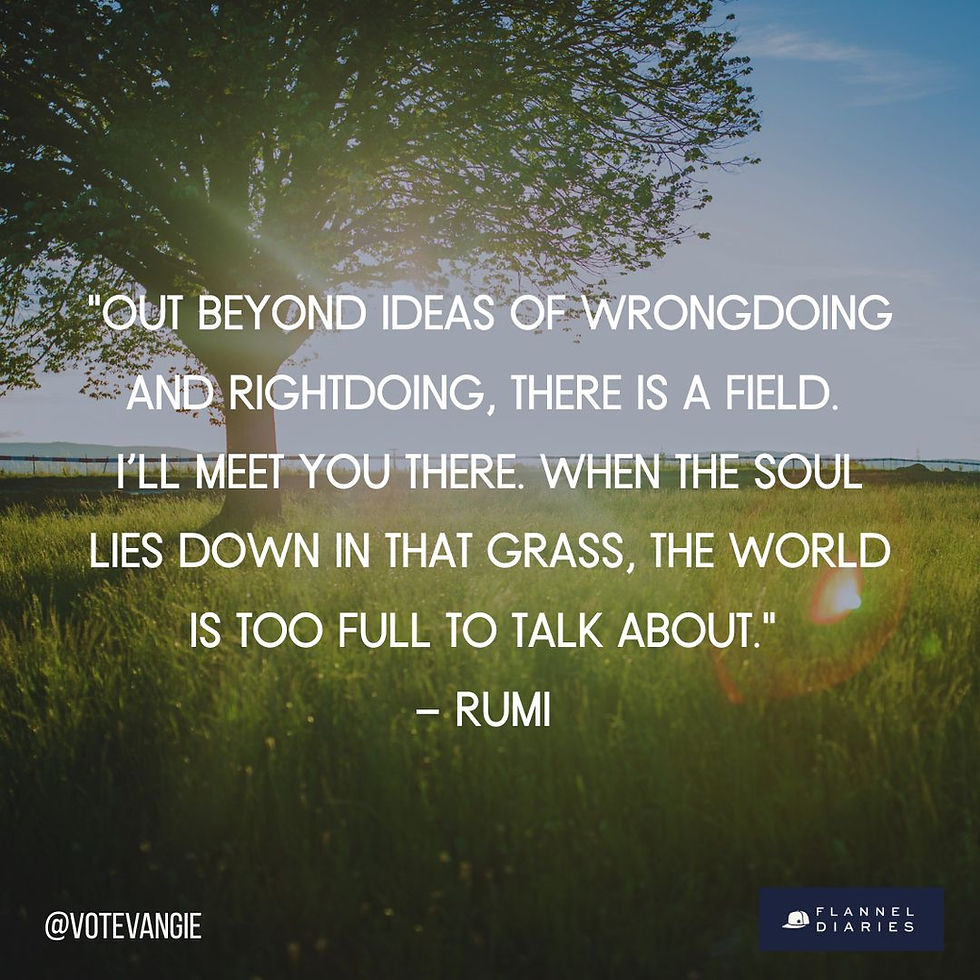
Grief has no expiration date. And neither does love.
Asal Khanghahi (January 16, 1975 - June 2, 2011)
#WeAreCosmicDust #GriefIsNotLinear #HealingThroughGrief #GriefJourney #WhenTheBodyRemembers #RememberingAsal #RestInPower
"It's a trip, you know? When you're a kid, you—you see the life you want, and it never crosses your mind that it's not gonna turn out that way." — Monica, Love & Basketball

I was thinking about that movie, "Love & Basketball," the other day. It came out in 2000, and at the time, I was dating a woman who complicated my life in ways I didn’t fully understand back then. She’d break up with me at least once a month, only to get back together like clockwork. It was a toxic cycle. We were both dragging around our childhood trauma, both immigrants, her from Poland, me from the Philippines. That combination sounds like the start of a joke, but it wasn’t funny. It was survival.
I thought I was deeply in love with her. I put up with emotional and mental abuse because, honestly, I didn’t know any different. I grew up believing love was conditional, so when it hurt, it felt familiar. I’d done some therapy before we met, after a suicide attempt, actually, so I was starting to heal. But she wasn’t there yet. There was so much jealousy, insecurity, and unhealed pain on her end, and I just absorbed it. I thought love meant staying, no matter how much it hurt.
It wasn’t love. Not really. It was intensity. A trauma bond. It grew into something, sure, but it wasn’t healthy. What taught me the most wasn’t the relationship; it was the way my friends showed up after the final, messy, drawn-out breakup. One that deserves its own story. But let me just say this: I never understood how someone who doesn’t want you can still act like they don’t want anyone else to have you. That part was always bizarre to me. When she found out I was seeing someone else, someone I worked with, she threatened to get me fired. So yeah, that was the level of toxicity we’re talking about.
That relationship broke my trust in other people. Worse, it broke my trust in myself, in my ability to recognize what love should actually look like. But I learned. Love shouldn’t come with threats. Or conditions. Not like that.
My friends, especially Kimi, were the lifeline. She literally shook me one night, desperate to make me see what I was putting myself through. That was the beginning of me waking up. Healing took time. It took unlearning. But it started because someone loved me enough to pull me back from the edge.
That movie reminded me how our childhood wounds show up in love, complicate it, and distort it. In Love & Basketball, the characters choose between love and basketball. But basketball was also their first love, the thing that steadied them when people failed them.
If you’d asked 25-year-old me what life would look like now, this wouldn’t have been the picture. Honestly, I’m not sure what I imagined. I thought I’d be a doctor. But that relationship threw me so far off track that I changed my major to political science. Somewhere along the way, I started dreaming about law school, but didn’t know if I’d ever actually get here. And yet, here I am. The path was anything but straight. It was broken, winding, bumpy, and entirely mine.
And here’s where golf comes in.
My high school didn’t offer golf, so I played basketball. I wasn’t great. I was decent at tennis. But if we’d had golf? I probably would’ve played. Now, I love it. And I think golf is a lot like falling in love.
You never really master it. Some people give up because it’s hard and takes forever to get good. You have to understand the fundamentals to even be decent. It requires time, patience, and humility. There are days you want to walk off the course. Shank a shot into the trees, top the ball into the pond, or take five to get out of a bunker. But then, there’s that one shot. The one that lands soft and close to the pin. The tap-in birdie. That’s what keeps you coming back.
Same with love. Those moments when it all clicks, when it feels easy and right, that’s what makes the struggle worth it.
I’m really good at getting out of the sand now. Mostly because I get a lot of practice. That’s true for golf, and for love. You don’t get better if you stop showing up. You have to learn from your bad shots, work on your mechanics, fix your flaws. That’s the hope, anyway.
I still remember the first time I broke 100. It took years. And when I’m rusty? I shoot over 100 again. But once the season gets going, once I’ve worked out the kinks, I’ll regularly shoot in the 80s. Every year, I set new goals: hit my driver more consistently, learn my woods, shave strokes. I don’t stop learning. I don’t stop improving. I just want to be more consistent. Lose fewer balls because it gets expensive, in golf and in love.
There’s no perfection. But if you’re lucky, you get better. You get more open. More grounded. More intentional. You start to trust yourself. Your instincts. Your course management.
Because ultimately, that’s what it comes down to, knowing the lay of the land and making smart choices. Especially when you’re in trouble.
Like Monica chose to fight for both basketball and love, I’ve learned I don’t have to give one up for the other. I just have to keep showing up on the course, in love, and in life, willing to play through the rough and trust that the next shot might be the one that changes everything.

"Every immigrant is a lover of possibility. Every journey to a new land is an act of faith in the unseen, the unknown, and the hope that love will be enough." — Unknown

Today is my dad’s birthday. He would have been 87 years old. He passed away from lung cancer over 15 years ago.
In February of 2020, I was in the Philippines with my family because my mom was dying. After long days spent taking care of all the heavy things you have to handle when a parent is nearing the end, my oldest sister and I would sit and talk. One night, we dug deep into our family history. And I realized how different my version of our story was from hers.
She’s ten years older than me—she remembers more. She remembers our life in the Philippines before we immigrated to the U.S., and things about our family that I was simply too young to know.
I always thought my parents' love story was romantic. Turns out, the truth was a lot messier. But isn’t that the harsh reality of most things?
My sister once joked that my dad tricked my mom into marrying him. According to her, my mom had come to visit my dad from a neighboring city. He told her there were no more buses running, so she had to spend the night. Back then, if you stayed overnight with a man—even if nothing happened—you were considered "soiled" and not fit to marry anyone else.
The thing is... there was another bus. He lied. He knew exactly what he was doing.
Basically, if you’ve ever listened to "Baby, It’s Cold Outside," my dad pulled that move—with intent.
I don’t even know if my mom truly wanted to marry him. What I remember being told as a child was that my dad heard about my mom, came to see her, fell instantly in love, and did whatever he could to marry her.
Well, long story short: they married. And here I am.
I was 45 years old when I found out that part of my family legacy. Jesus H. Christ on a bike. You can imagine how that scrambled my brain.
Here’s the thing: you can love and hate someone equally. And that was my relationship with my dad. Parent-child relationships are complicated.
I both idealized and resented him growing up. He was a narcissist. He was physically and mentally abusive. And yet... he was still my father. He worked hard to provide for us. He gave us opportunities he never had. He made sure I always had a home to come back to if I needed it.
Your first toxic relationships are almost always with your parents. And when he was dying, I didn’t hesitate. I got on a plane, flew 5,000 miles, and sat by his side. Because no matter how prepared you think you are, you’re never really ready to say goodbye.
I honor my father for the sacrifices he made for our family. I forgave him for the harm he caused. At the end of the day, he raised a family that chooses, again and again, to serve others. And that comes from him. He was a public servant.
As I get older, I think about where my parents were at the age I am now. When my dad was my age, he had only been in America for a few years. He’d crossed the globe to start over, landing in frigid Minnesota—talk about culture and weather shock—and then packed up a station wagon and moved his whole family cross-country to California for a new beginning.
I can only imagine the level of sheer delusion he had to have to believe we were going to be okay. Maybe he thought, "It’ll be good in sunny California... if we can make it there, we can make it anywhere..." Wait—that's New York. Anyway.
As I start new chapters of my own life, I take some comfort knowing I'm only making decisions for myself. My dad was carrying all of us. No wonder he was stressed out. I don’t blame him.
The immigrant story is different for everyone. But at its heart, it’s about survival. About hope. About trying to create a better life.
Immigrants are not the enemy.
We don’t come here to take from anyone.
This land is rich, abundant, and vast.
We come to add to it. To bring our own cultures, our own flavors, our own dreams.
I hope, in my father’s story, you can see the struggle that so many immigrants face.
Seeking safety.
Seeking stability.
Seeking a place to belong.
You don’t have to walk a thousand miles in my father’s shoes to show kindness and dignity to people who don't look like you.
Mahal Kita.
Happy Birthday, Dad. (Vid Vidal R. Castro, April 28, 1938 – October 23, 2009)
